
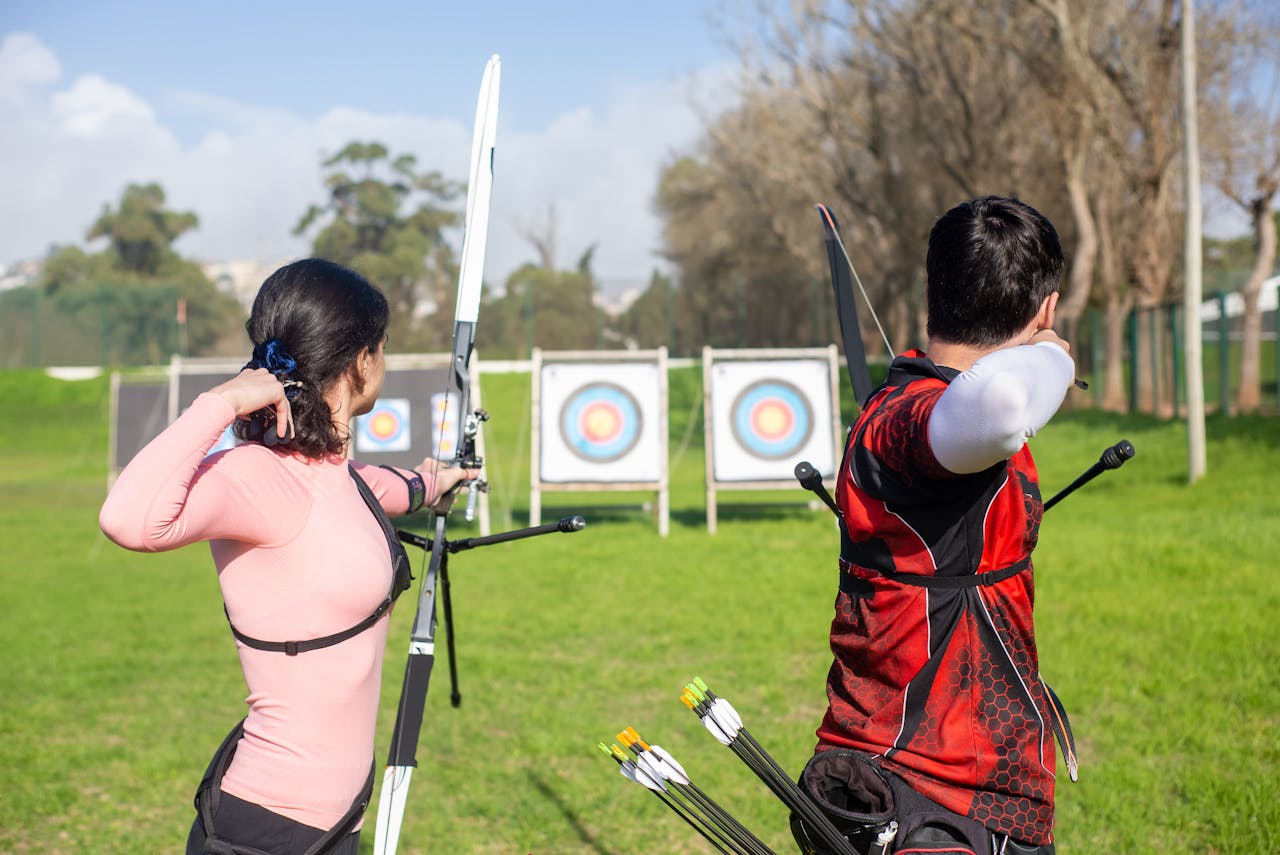

How to Improve Accuracy in Precision Shooting Sports
Precision shooting sports demand a combination of discipline, technique, and consistency. Whether you are involved in target shooting with air rifles, archery, or slingshots, accuracy is never accidental. It is built through repetition, refinement, and a deep understanding of how small variables affect performance.
Many beginners assume that improving accuracy is about upgrading equipment alone, but the reality is more complex. Body mechanics, mental focus, and environmental awareness all play a significant role in how well shots land on target. Even subtle inconsistencies can lead to major deviations over distance.
In modern recreational and competitive shooting communities, brands such as GX Slingshots are often associated with entry-level and intermediate precision slingshot shooting. However, even the best equipment cannot compensate for poor fundamentals, which makes technique development the true foundation of accuracy.
Understanding Fundamentals of Precision Shooting
At the core of all precision shooting sports is a simple principle: repeatability. Every shot must be executed in as close to the same way as possible. The smallest variation in stance, grip, or release can shift the point of impact.
A stable foundation starts with body alignment. Feet should be positioned consistently relative to the target, and the torso should remain relaxed but controlled. Over-tensioning muscles introduces micro-movements that reduce precision.
Grip consistency is equally important. Whether holding a rifle, bow, or slingshot, pressure should remain even and repeatable. A loose or shifting grip alters the trajectory and introduces unpredictability.
Proper sight alignment and focus are also essential. The shooter must learn to balance focus between the target and aiming reference without straining the eyes. This balance improves with deliberate practice and patience.
Equipment Consistency and Setup
Equipment plays a supportive but critical role in accuracy. Even minor variations in setup can lead to inconsistent results. Consistency in bands, draw weight, or sight calibration is essential for precision sports.
Slingshot users, in particular, often underestimate how much band tension and pouch alignment affect shot grouping. Regular inspection and maintenance ensure that performance remains stable over time.
For example, users of GX Slingshots often find that maintaining identical band lengths and consistent pouch positioning dramatically improves grouping tightness. Even small asymmetries in elastic tension can cause shots to drift left or right unpredictably.
Key equipment considerations include:
- Ensuring consistent draw length across all shots
- Regularly replacing worn elastic bands or strings
- Checking alignment of sights or reference points
- Maintaining a stable and comfortable grip surface
- Using the same ammunition type and size for all practice sessions
Beyond slingshots, the same principles apply to archery and air rifle shooting. Standardization reduces variables, allowing the shooter to focus purely on technique rather than compensating for equipment inconsistencies.
Environmental conditions also interact with equipment performance. Humidity, temperature, and wind resistance can subtly alter projectile behavior, especially in lightweight projectile sports.
Breathing, Stance, and Release Control
Breathing control is one of the most overlooked aspects of accuracy. Controlled breathing stabilizes the body and reduces unnecessary movement. Most experienced shooters adopt a pause at the natural respiratory break before releasing a shot.
Stance contributes heavily to balance and recoil absorption. A stable stance distributes weight evenly and prevents sway. Feet should remain firmly planted, with knees slightly relaxed rather than locked.
Release technique must be smooth and deliberate. Any sudden jerk or inconsistent motion will disrupt the shot path. The goal is a controlled, repeatable release that minimizes disturbance to the aiming system.
Developing this consistency takes time. Repetition under controlled conditions is more valuable than rapid, unfocused practice sessions.
Mental Focus and Visualization
Accuracy is as much mental as it is physical. Focus determines whether physical skills can be executed effectively under pressure. A distracted mind leads to inconsistent execution, even with strong technical ability.
Visualization is a powerful tool in precision sports. Mentally rehearsing the shot before execution helps align movement patterns and timing. Over time, this creates a conditioned response that improves consistency.
Stress management also plays a role. Competitive environments introduce pressure that can disrupt rhythm and timing. Learning to maintain calm under these conditions is essential for long-term improvement.
Some shooters use routine-based preparation to stabilize their mindset. Repeating the same pre-shot sequence helps signal the brain that it is time to focus and execute.
Environmental Factors Affecting Accuracy
Outdoor shooting introduces variables that cannot be fully controlled. Wind is one of the most significant factors affecting projectile trajectory. Even light gusts can alter shot placement at longer distances.
Lighting conditions also influence aiming precision. Shadows, glare, and inconsistent lighting can distort visual perception of the target. Adjusting position or waiting for stable conditions can improve outcomes.
Temperature and humidity affect both equipment and projectile behavior. Elastic materials may expand or contract slightly, and air density can influence flight paths in subtle but measurable ways.
Successful shooters learn to read their environment continuously. Rather than resisting these variables, they adapt their technique accordingly.
Training Drills for Consistent Improvement
Structured practice is essential for long-term progress. Random shooting without focus rarely leads to meaningful improvement. Instead, targeted drills that isolate specific skills are more effective.
Repetition-based training helps reinforce muscle memory. Shooting at the same distance repeatedly builds familiarity with trajectory and correction patterns. Over time, this creates predictable outcomes.
A useful training approach includes:
- Practicing at fixed distances before increasing range
- Focusing on grouping rather than single-shot accuracy
- Alternating between slow deliberate shots and timed drills
- Recording performance trends to identify inconsistencies
- Practicing under varying environmental conditions
Progress should be measured in consistency, not just occasional accuracy. Tight grouping is a stronger indicator of skill development than isolated successful shots.
Coaching or peer feedback can also accelerate improvement by identifying subtle errors that are difficult to notice individually.
Safety and Responsible Practice
Safety is fundamental in all precision shooting sports. Proper handling, awareness of surroundings, and controlled environments are essential to prevent accidents. Every session should begin with a clear understanding of safe direction and backstop use.
Protective equipment, such as eye protection, is strongly recommended regardless of experience level. Even low-powered projectile sports can cause injury if mishandled.
Storage of equipment should also be considered carefully. Elastic materials and projectiles must be kept in safe conditions to avoid degradation or unintended use.
Responsible practice extends beyond the individual. Respect for public spaces, other people, and legal guidelines ensures that the sport remains accessible and sustainable.
Accuracy improves most effectively when practice is structured, safe, and intentional. Combining technical refinement with mental discipline leads to steady, long-term development in precision shooting sports.